> ## Documentation Index
> Fetch the complete documentation index at: https://akshanshgusain.mintlify.site/llms.txt
> Use this file to discover all available pages before exploring further.
# Scale a relational database
> There are many techniques to scale a relational database: master-slave replication, master-master replication, federation, sharding, denormalization, and SQL tuning.
> Replication means keeping a copy of the same data on multiple machines that are
> connected via a network.
* To keep data geographically close to your users (and thus reduce latency)
* To allow the system to continue working even if some of its parts have failed
(and thus increase availability)
* To scale out the number of machines that can serve read queries (and thus
increase read throughput)
# Leader-Based Replication
 ## Master-slave replication
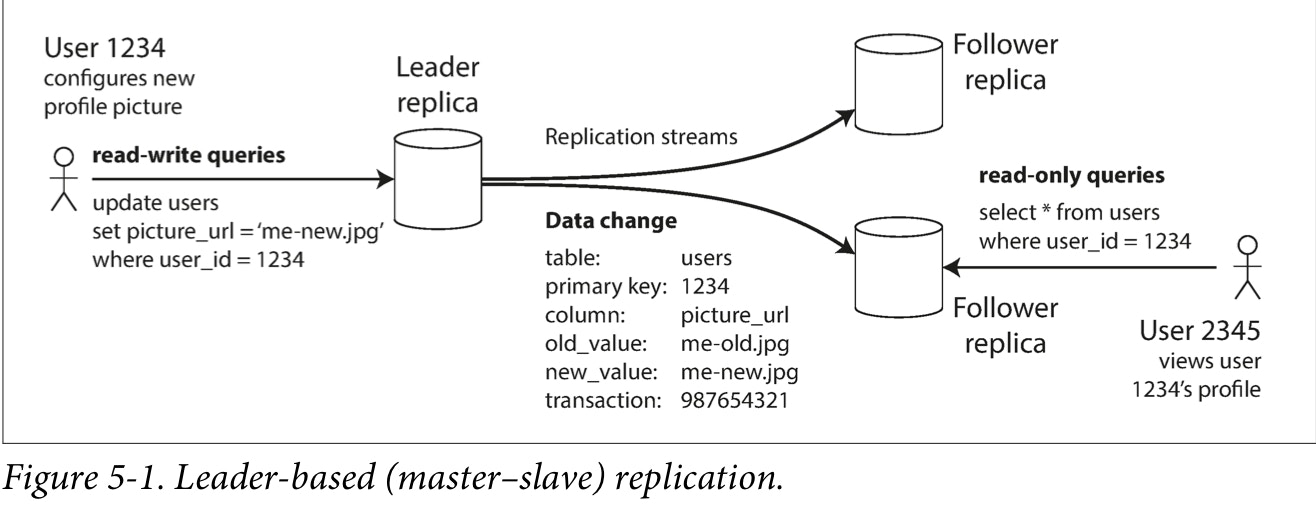
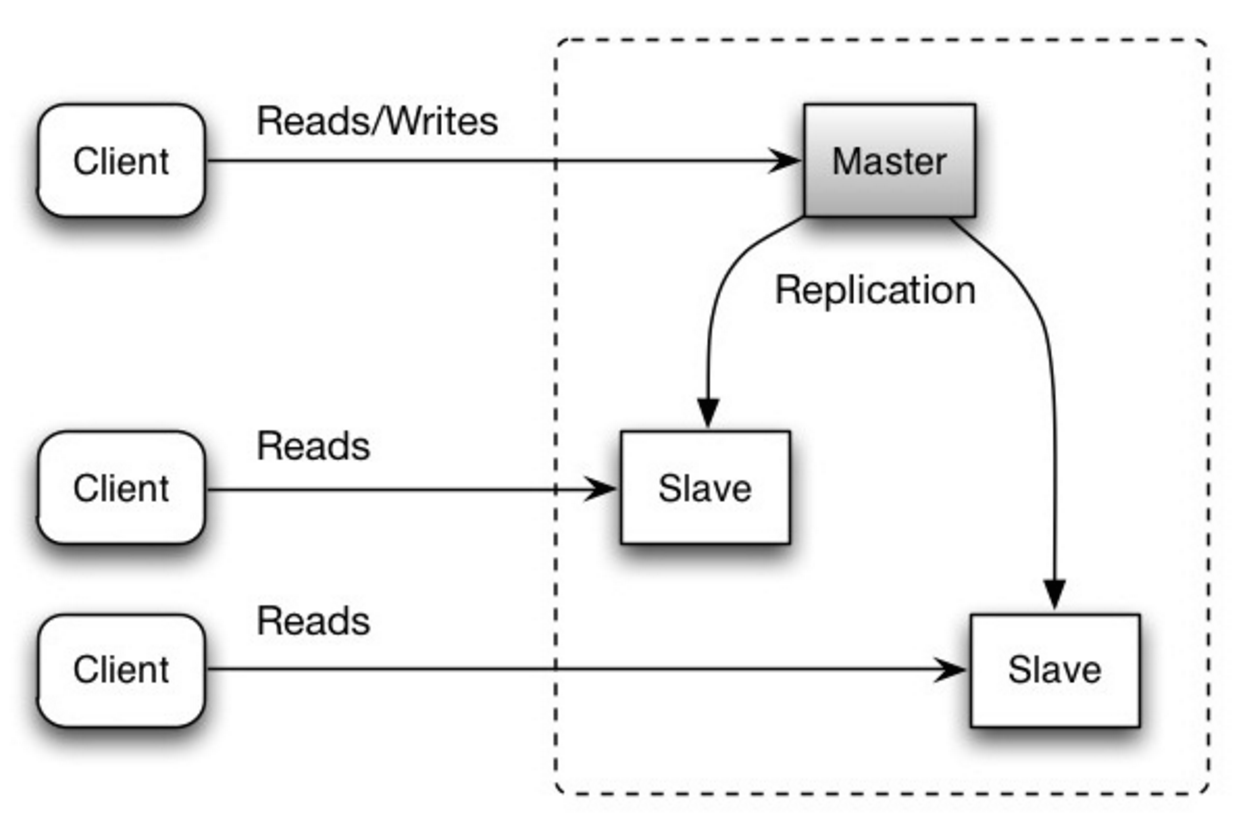
The master serves reads and writes, replicating writes to one or more slaves, which serve only reads. Slaves can also
replicate to additional slaves in a tree-like fashion. If the master goes offline, the system can continue to operate
in read-only mode until a slave is promoted to a master or a new master is provisioned.
## Master-slave replication
The master serves reads and writes, replicating writes to one or more slaves, which serve only reads. Slaves can also
replicate to additional slaves in a tree-like fashion. If the master goes offline, the system can continue to operate
in read-only mode until a slave is promoted to a master or a new master is provisioned.
 ### Synchronous vs Asynchronous Replication
Often, leader-based replication is configured to be completely asynchronous
### Setting up New Followers
### Handling Node Outage
#### **Follower failure: Catch-up recovery**
#### **Master failure: Failover**
### Replication Lag and Eventual Consistency
#### Read-After-Write Consistency
#### Cross-Device Read-After-Write Consistency
#### Monotonic Reads
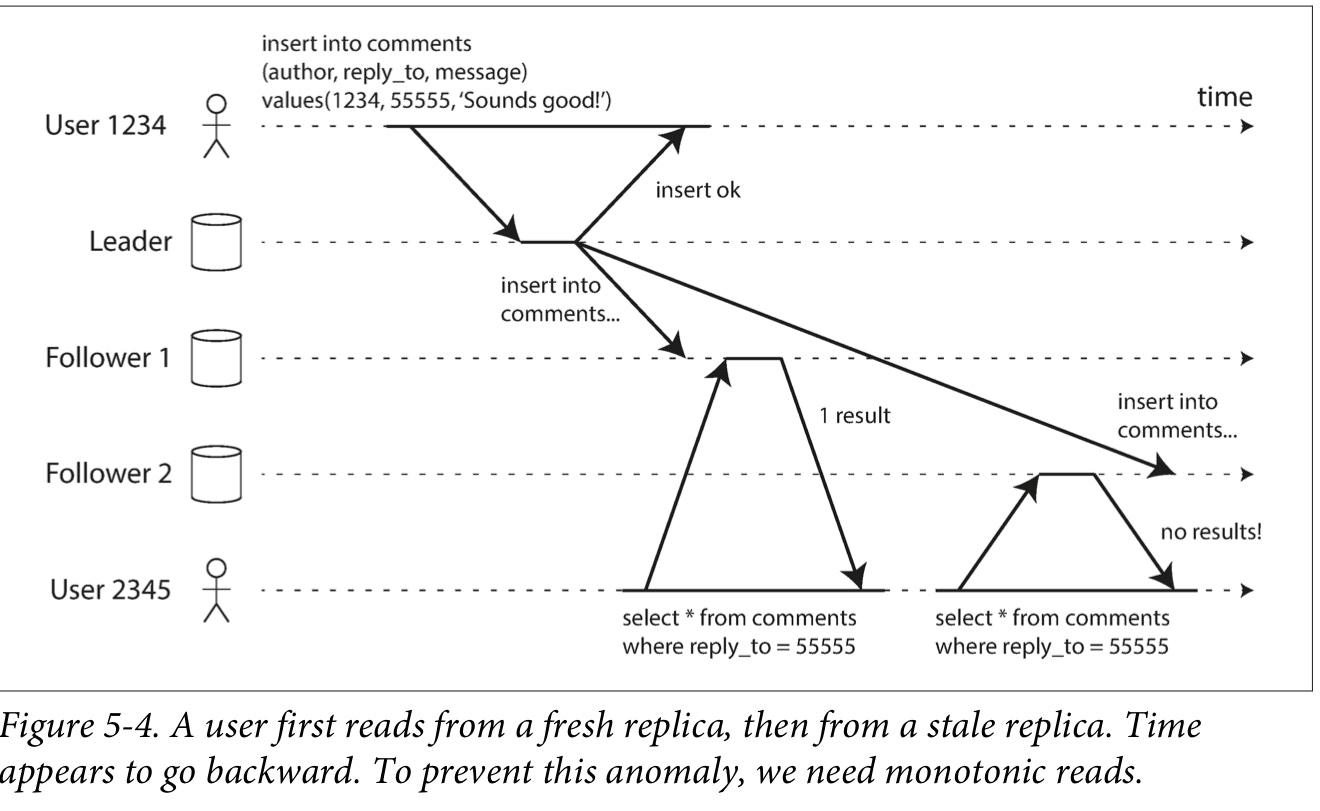
An anomaly that can occur when reading from asynchronous
followers is that it’s possible for a user to see things moving backward in time.
This can happen if a user makes several reads from different replicas. For example,
Figure 5-4 shows user 2345 making the same query twice, first to a follower with little
lag, then to a follower with greater lag. (This scenario is quite likely if the user
refreshes a web page, and each request is routed to a random server.) The first query
returns a comment that was recently added by user 1234, but the second query
doesn’t return anything because the lagging follower has not yet picked up that write.
### Synchronous vs Asynchronous Replication
Often, leader-based replication is configured to be completely asynchronous
### Setting up New Followers
### Handling Node Outage
#### **Follower failure: Catch-up recovery**
#### **Master failure: Failover**
### Replication Lag and Eventual Consistency
#### Read-After-Write Consistency
#### Cross-Device Read-After-Write Consistency
#### Monotonic Reads
An anomaly that can occur when reading from asynchronous
followers is that it’s possible for a user to see things moving backward in time.
This can happen if a user makes several reads from different replicas. For example,
Figure 5-4 shows user 2345 making the same query twice, first to a follower with little
lag, then to a follower with greater lag. (This scenario is quite likely if the user
refreshes a web page, and each request is routed to a random server.) The first query
returns a comment that was recently added by user 1234, but the second query
doesn’t return anything because the lagging follower has not yet picked up that write.
 #### Consistent Prefix Reads
## Master-Master replication
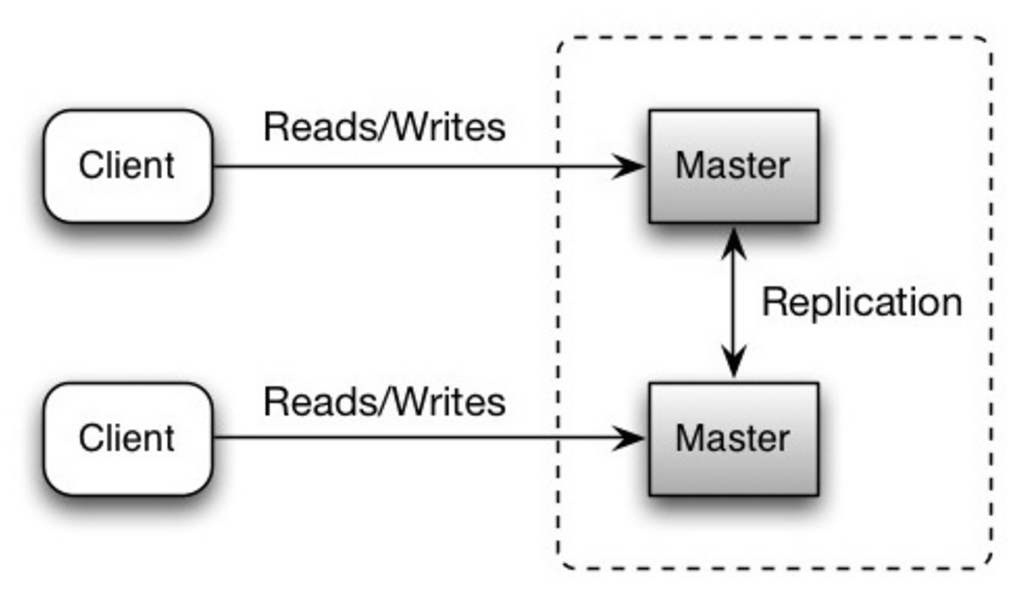
Both masters serve reads and writes and coordinate with each other on writes. If either master goes down, the system can
continue to operate with both reads and writes.
#### Consistent Prefix Reads
## Master-Master replication
Both masters serve reads and writes and coordinate with each other on writes. If either master goes down, the system can
continue to operate with both reads and writes.
 It rarely makes sense to use a multi-leader setup within a single datacenter, because
the benefits rarely outweigh the added complexity. However, there are some situa‐
tions in which this configuration is reasonable.
### Use Cases of Multi-Leader Replication
1. Multi-Datacenter operation
2. Clients with offline opertions
3. Collaborative editing
### Handling Write Conflicts
The biggest problem with multi-leader replication is that write conflicts can occur, which means that conflict resolution
is required.
#### Conflict Detection (Synchronous vs Asynchronous)
#### Conflict Avoidance
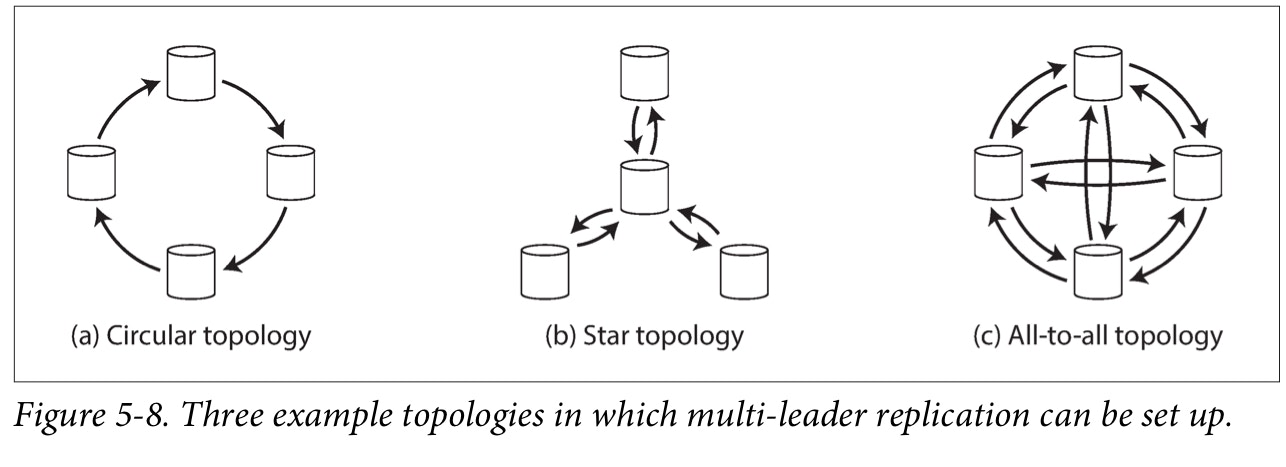
### Topologies
A replication topology describes the communication paths along which writes are
propagated from one node to another. If you have two leaders, like in Figure 5-7,
there is only one plausible topology: leader 1 must send all of its writes to leader 2,
and vice versa. With more than two leaders, various different topologies are possible.
It rarely makes sense to use a multi-leader setup within a single datacenter, because
the benefits rarely outweigh the added complexity. However, there are some situa‐
tions in which this configuration is reasonable.
### Use Cases of Multi-Leader Replication
1. Multi-Datacenter operation
2. Clients with offline opertions
3. Collaborative editing
### Handling Write Conflicts
The biggest problem with multi-leader replication is that write conflicts can occur, which means that conflict resolution
is required.
#### Conflict Detection (Synchronous vs Asynchronous)
#### Conflict Avoidance
### Topologies
A replication topology describes the communication paths along which writes are
propagated from one node to another. If you have two leaders, like in Figure 5-7,
there is only one plausible topology: leader 1 must send all of its writes to leader 2,
and vice versa. With more than two leaders, various different topologies are possible.
 **Disadvantage(s): master-master replication**
* You'll need a load balancer or you'll need to make changes to your application logic to determine where to write.
* Most master-master systems are either loosely consistent (violating ACID) or have increased write latency due to synchronization.
* Conflict resolution comes more into play as more write nodes are added and as latency increases.
# Leaderless Replication
The replication approaches we have discussed so far in this chapter—single-leader
and multi-leader replication—are based on the idea that a client sends a write request
to one node (the leader), and the database system takes care of copying that write to
the other replicas. A leader determines the order in which writes should be processed,
and followers apply the leader’s writes in the same order.
Some data storage systems take a different approach, abandoning the concept of a
leader and allowing any replica to directly accept writes from clients. Some of the ear‐
liest replicated data systems were leaderless, but the idea was mostly forgotten
during the era of dominance of relational databases. It once again became a fashiona‐
ble architecture for databases after `Amazon` used it for its in-house `Dynamo` system.vi `Riak`, `Cassandra`, and
`Voldemort` are open source datastores with leaderless
replication models inspired by Dynamo, so this kind of database is also known as
`Dynamo-style`.\
In some leaderless implementations, the client directly sends its writes to several rep‐
licas, while in others, a coordinator node does this on behalf of the client. However,
unlike a leader database, that coordinator does not enforce a particular ordering of
writes. As we shall see, this difference in design has profound consequences for the
way the database is used.
### Writing to a database when a node is down
In a leader-based config, if you want ti continue processing writes, you may need to perform a [failover](#handling-node-outage). \
On the other hand, in a leaderless configuration, failover does not exist. Figure 5-10
shows what happens: the client (user 1234) sends the write to all three replicas in par‐
allel, and the two available replicas accept the write but the unavailable replica misses
it. Let’s say that it’s sufficient for two out of three replicas to acknowledge the write:
after user 1234 has received two ok responses, we consider the write to be successful.
The client simply ignores the fact that one of the replicas missed the write.
**Disadvantage(s): master-master replication**
* You'll need a load balancer or you'll need to make changes to your application logic to determine where to write.
* Most master-master systems are either loosely consistent (violating ACID) or have increased write latency due to synchronization.
* Conflict resolution comes more into play as more write nodes are added and as latency increases.
# Leaderless Replication
The replication approaches we have discussed so far in this chapter—single-leader
and multi-leader replication—are based on the idea that a client sends a write request
to one node (the leader), and the database system takes care of copying that write to
the other replicas. A leader determines the order in which writes should be processed,
and followers apply the leader’s writes in the same order.
Some data storage systems take a different approach, abandoning the concept of a
leader and allowing any replica to directly accept writes from clients. Some of the ear‐
liest replicated data systems were leaderless, but the idea was mostly forgotten
during the era of dominance of relational databases. It once again became a fashiona‐
ble architecture for databases after `Amazon` used it for its in-house `Dynamo` system.vi `Riak`, `Cassandra`, and
`Voldemort` are open source datastores with leaderless
replication models inspired by Dynamo, so this kind of database is also known as
`Dynamo-style`.\
In some leaderless implementations, the client directly sends its writes to several rep‐
licas, while in others, a coordinator node does this on behalf of the client. However,
unlike a leader database, that coordinator does not enforce a particular ordering of
writes. As we shall see, this difference in design has profound consequences for the
way the database is used.
### Writing to a database when a node is down
In a leader-based config, if you want ti continue processing writes, you may need to perform a [failover](#handling-node-outage). \
On the other hand, in a leaderless configuration, failover does not exist. Figure 5-10
shows what happens: the client (user 1234) sends the write to all three replicas in par‐
allel, and the two available replicas accept the write but the unavailable replica misses
it. Let’s say that it’s sufficient for two out of three replicas to acknowledge the write:
after user 1234 has received two ok responses, we consider the write to be successful.
The client simply ignores the fact that one of the replicas missed the write.
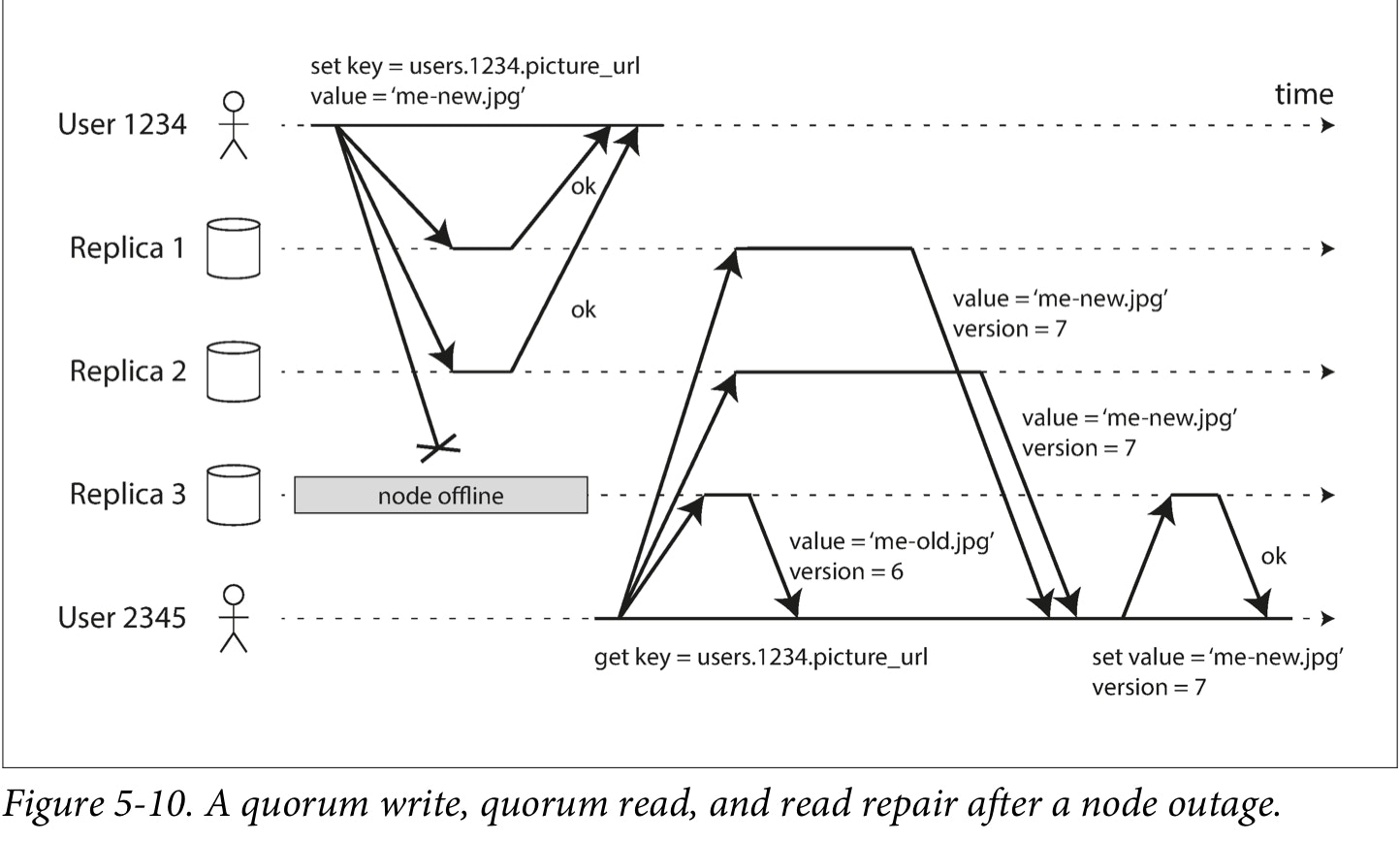 Now imagine that the unavailable node comes back online, and clients start reading
from it. Any writes that happened while the node was down are missing from that
node. Thus, if you read from that node, you may get stale (outdated) values as
responses.
To solve that problem, when a client reads from the database, it doesn’t just send its
request to one replica: read requests are also sent to several nodes in parallel. The cli‐
ent may get different responses from different nodes; i.e., the up-to-date value from
one node and a stale value from another. Version numbers are used to determine
which value is newer
#### Read repairs and anti-antropy
1. Read repair
2. Anti-antropy
#### Quorums for reading and writing
#### Limitations of Quorum Consistency
#### Detecting Concurrent writes
**Disadvantage(s): replication**
* There is a potential for loss of data if the master fails before any newly written data can be replicated to other nodes.
* Writes are replayed to the read replicas. If there are a lot of writes, the read replicas can get bogged down with replaying writes and can't do as many reads.
* The more read slaves, the more you have to replicate, which leads to greater replication lag.
* On some systems, writing to the master can spawn multiple threads to write in parallel, whereas read replicas only support writing sequentially with a single thread.
* Replication adds more hardware and additional complexity.
Now imagine that the unavailable node comes back online, and clients start reading
from it. Any writes that happened while the node was down are missing from that
node. Thus, if you read from that node, you may get stale (outdated) values as
responses.
To solve that problem, when a client reads from the database, it doesn’t just send its
request to one replica: read requests are also sent to several nodes in parallel. The cli‐
ent may get different responses from different nodes; i.e., the up-to-date value from
one node and a stale value from another. Version numbers are used to determine
which value is newer
#### Read repairs and anti-antropy
1. Read repair
2. Anti-antropy
#### Quorums for reading and writing
#### Limitations of Quorum Consistency
#### Detecting Concurrent writes
**Disadvantage(s): replication**
* There is a potential for loss of data if the master fails before any newly written data can be replicated to other nodes.
* Writes are replayed to the read replicas. If there are a lot of writes, the read replicas can get bogged down with replaying writes and can't do as many reads.
* The more read slaves, the more you have to replicate, which leads to greater replication lag.
* On some systems, writing to the master can spawn multiple threads to write in parallel, whereas read replicas only support writing sequentially with a single thread.
* Replication adds more hardware and additional complexity.